Possible causes
Several issues can produce the same symptom. A technician may need to inspect the unit before confirming the cause.
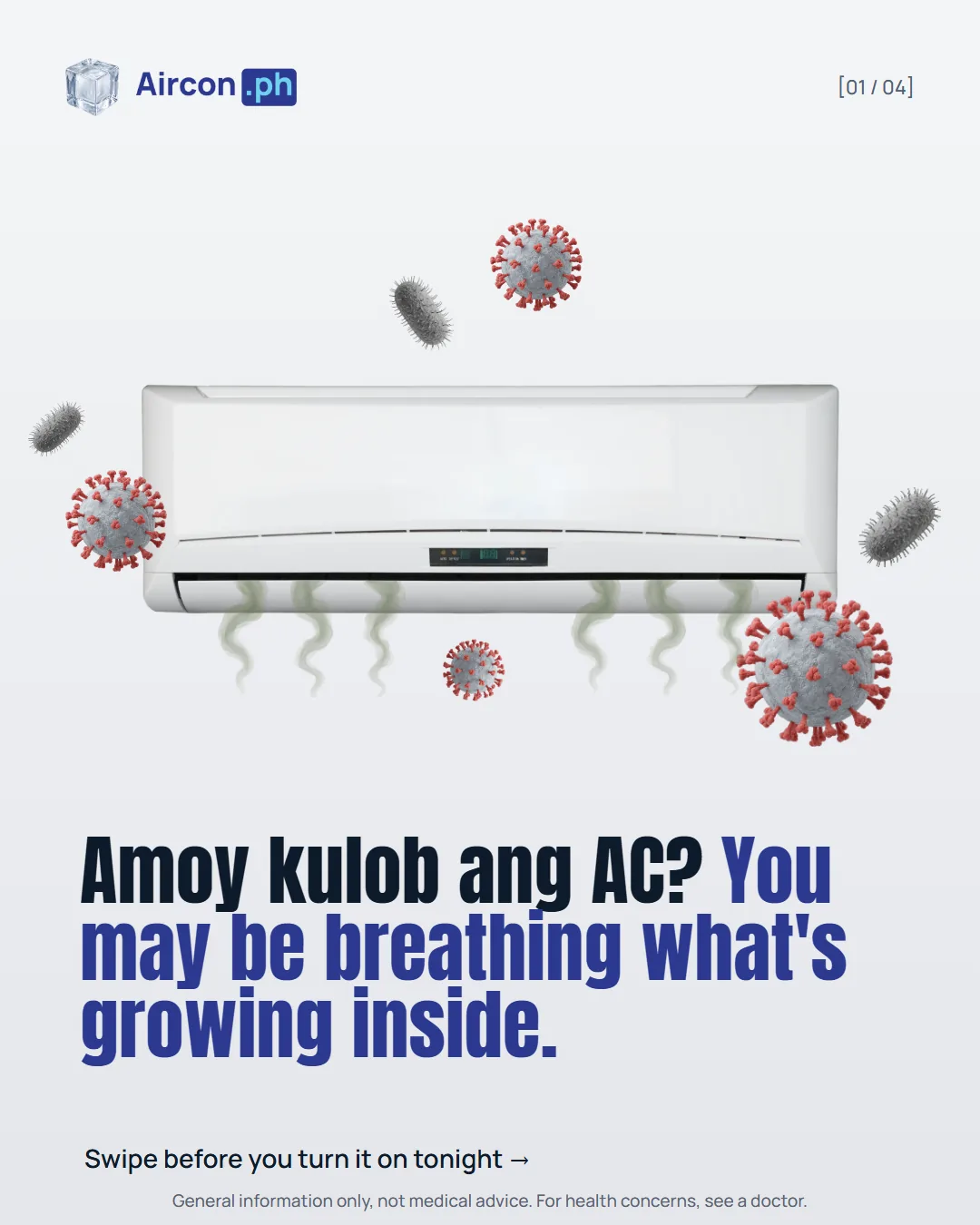
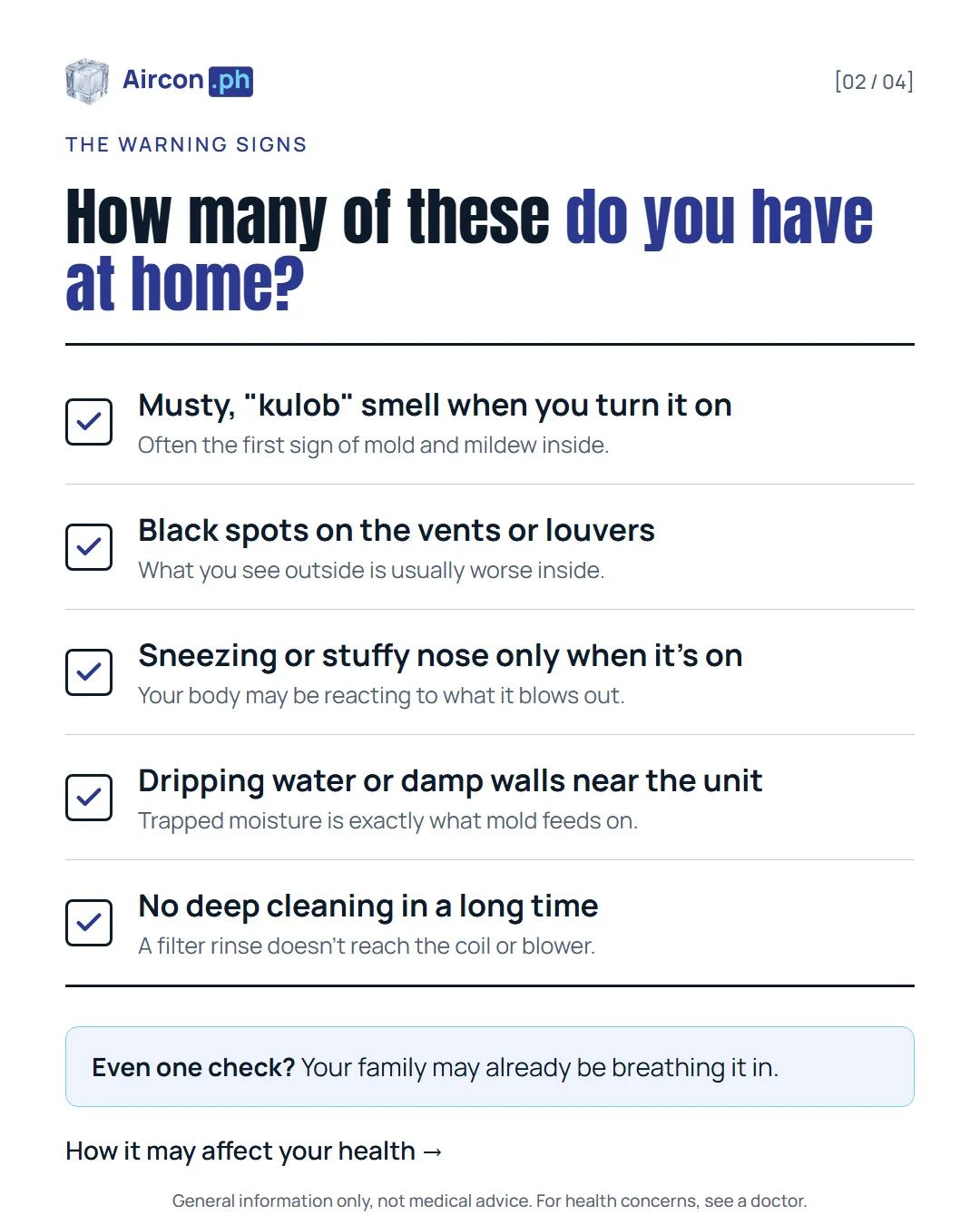
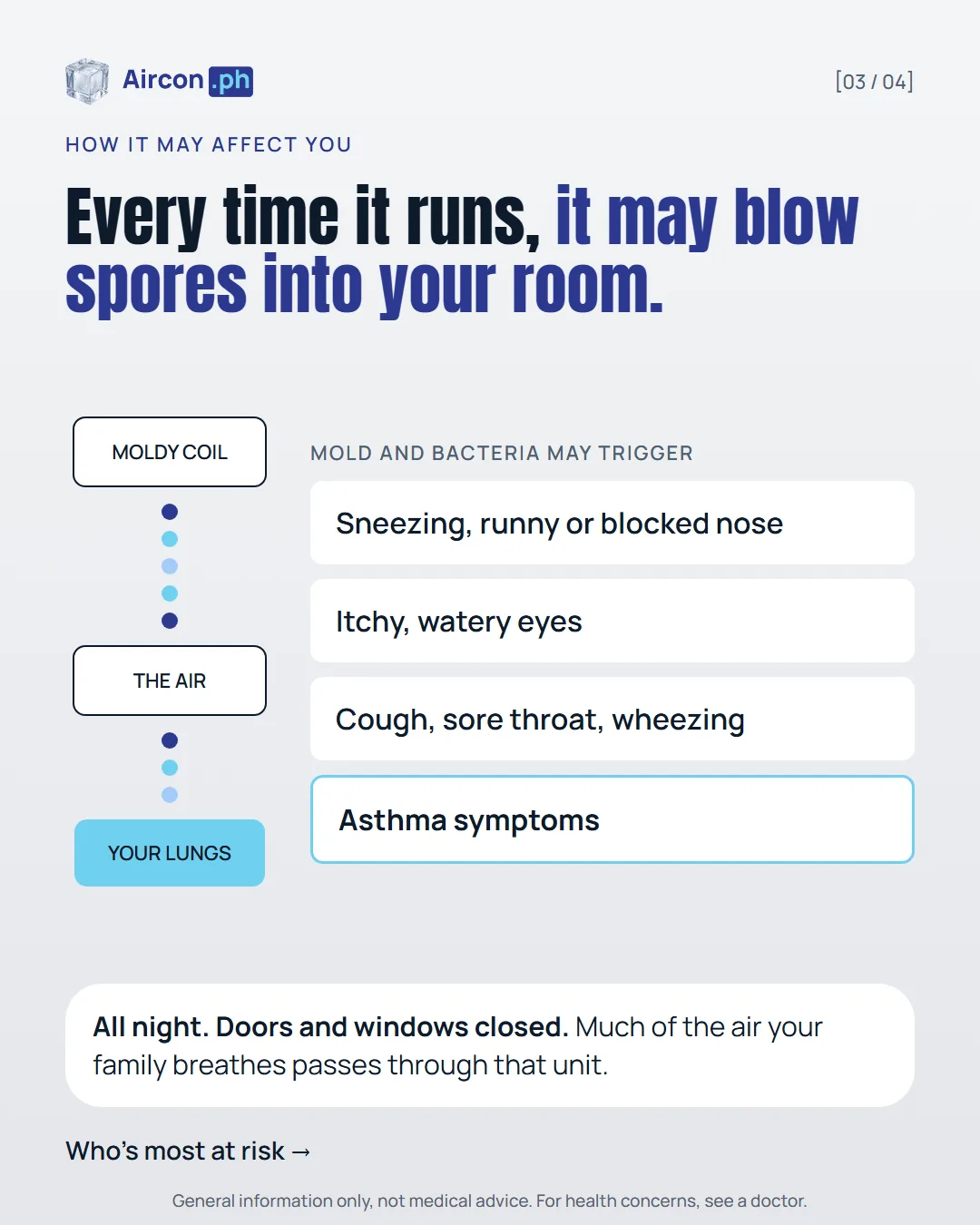
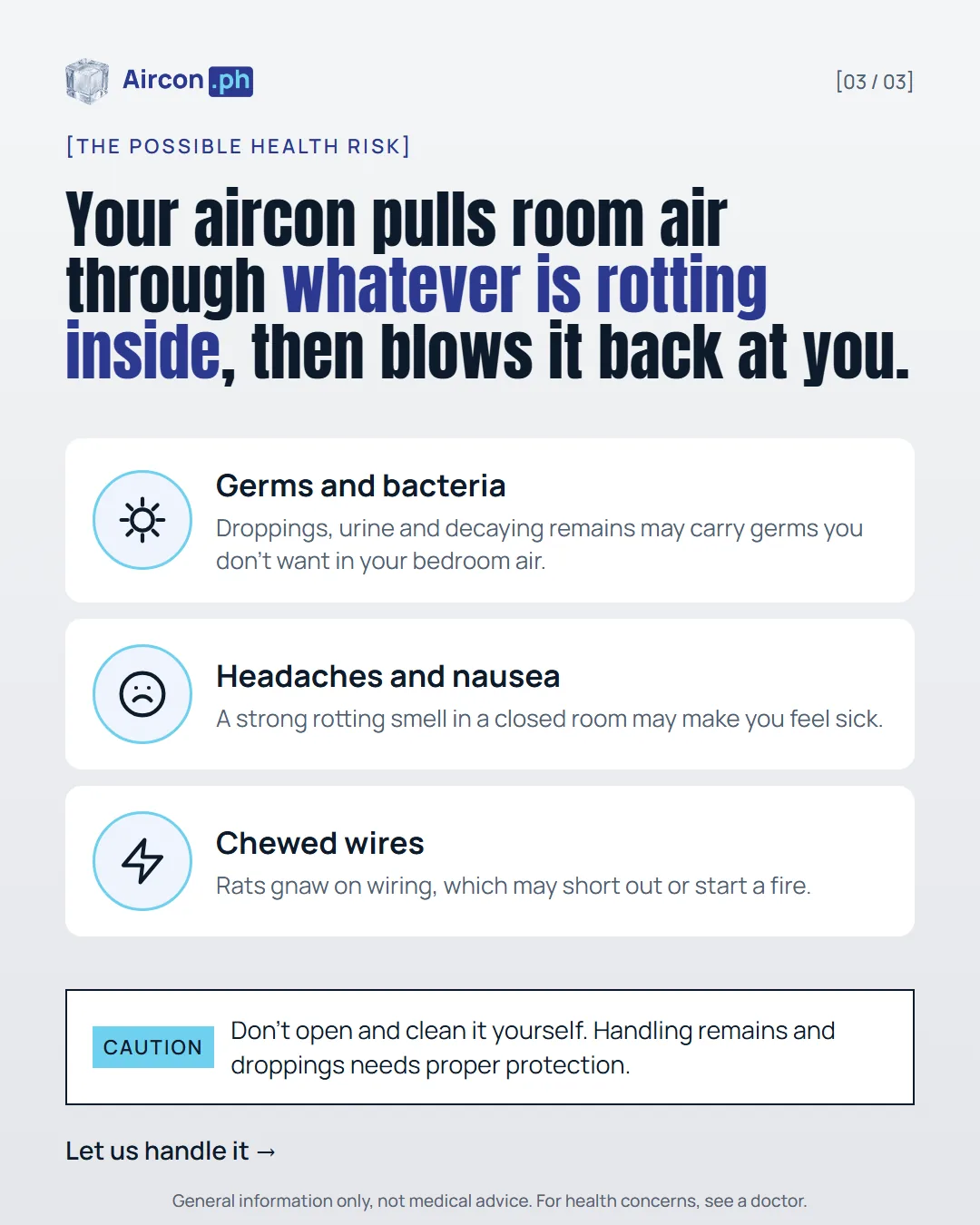
- Mold and Mildew Buildup — The evaporator coil and drain pan stay moist after the aircon shuts off. In Philippine humidity (75–90% RH), mold colonies establish within days. The aircon then blows mold spores into your room — a serious health hazard.
- Bacteria in Drain Pan — Stagnant water in a clogged drain pan breeds bacteria. The resulting smell is often described as rotten eggs, sewer-like, or musty. This is especially common in units that have not been cleaned in months.
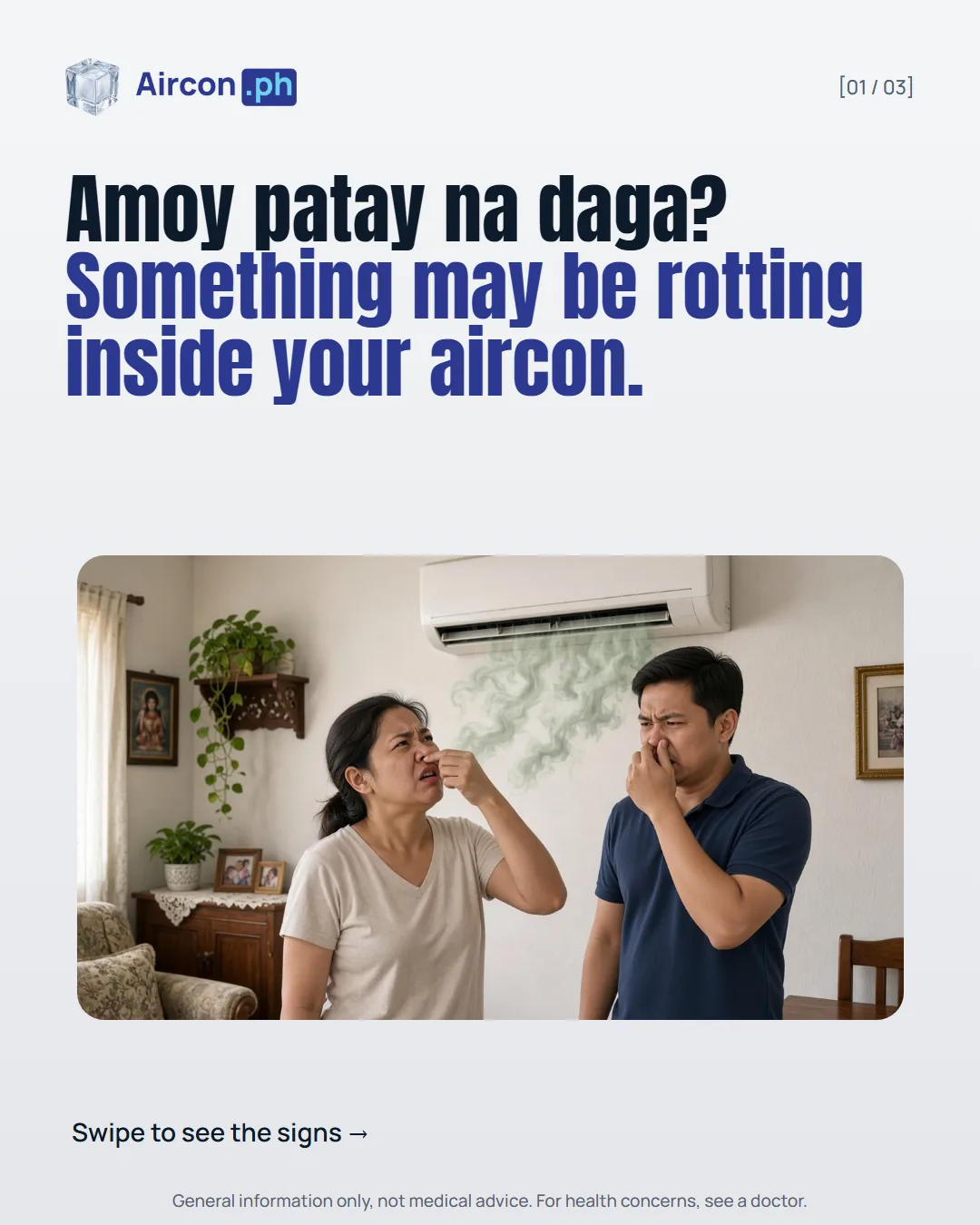
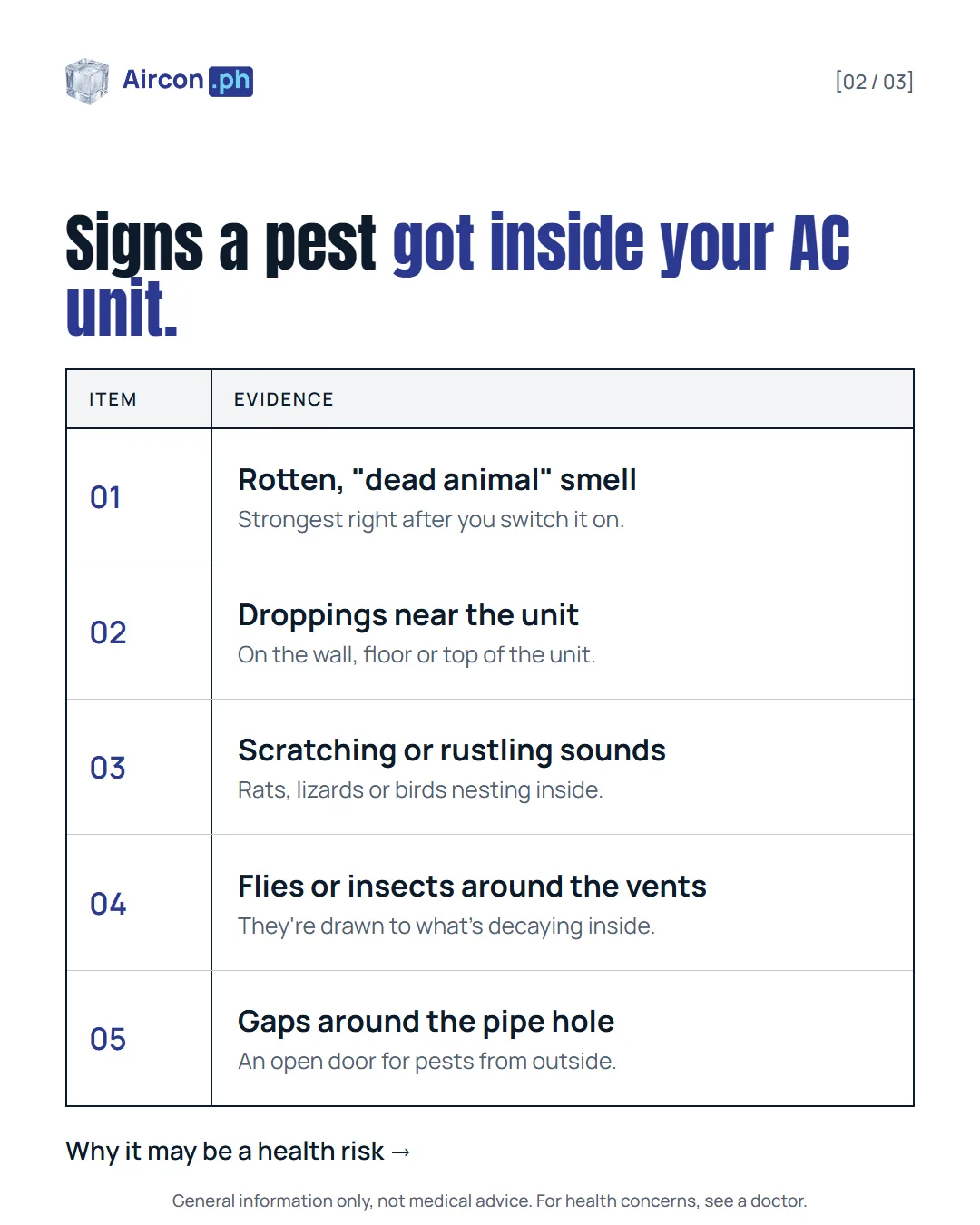
- Dead Animals or Insects — Cockroaches, lizards (butiki), and small rodents sometimes enter outdoor units and die inside. The smell intensifies when the unit runs and circulates the air. Check the outdoor unit if you notice a sudden foul odor.
- Dirty Air Filter — A heavily soiled filter accumulates bacteria and dead skin cells (dust mites thrive in Philippine conditions). When air passes through, it picks up the smell. A filter overdue for cleaning is a common source of stale, musty air.
Checks you can do safely
Turn the unit off before opening panels or cleaning accessible filters. Stop if the unit shows electrical damage or exposed wiring.
- Clean the air filter with antibacterial soap — Remove the filter and wash with warm water and antibacterial dish soap. Rinse thoroughly. Spray with a diluted vinegar solution (1:1 water to white vinegar) before drying to kill mold spores.
- Clean the drain pan — Access the drain pan below the evaporator coil. Remove standing water. Scrub with a mixture of 1 tablespoon bleach in 1 liter of water. Rinse and allow it to drain completely.
- Run the fan-only mode to dry the unit — Before turning off the aircon for the night, switch to "Fan Only" mode for 15–20 minutes. This dries the evaporator coil and drain pan, dramatically reducing mold growth in Philippine humidity.
- Inspect the outdoor unit for dead animals — Turn off power. Open the outdoor unit access panel with a screwdriver. Look for any dead insects, lizards, or rodents. Remove them with gloves and dispose properly. Spray the interior with an enzyme-based odor eliminator.
When to request a technician
Book a diagnostic visit when the issue persists or any of these conditions apply.
- Smell persists after filter cleaning and drain pan cleaning
- You see visible black mold on the evaporator coil (requires chemical coil cleaning)
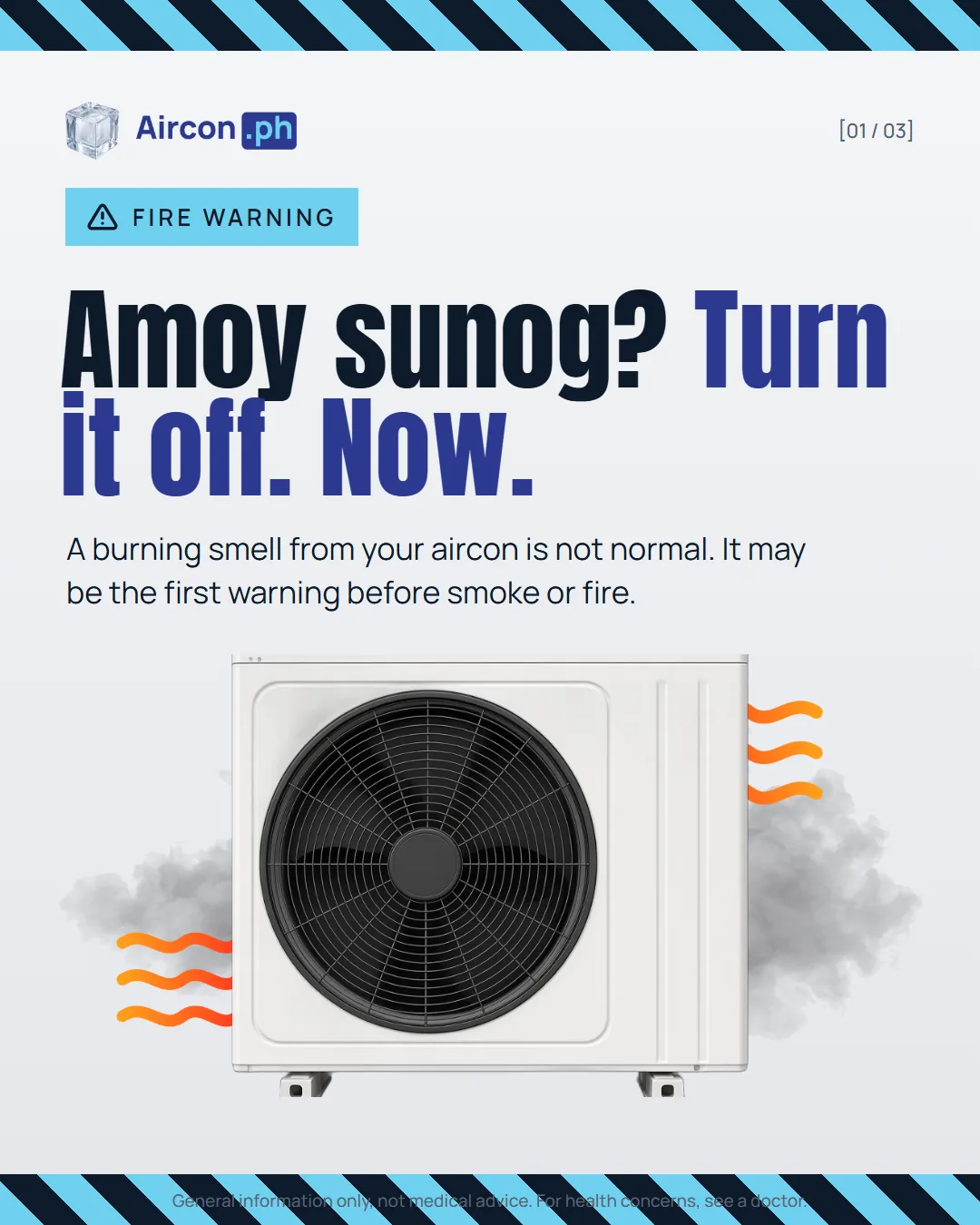
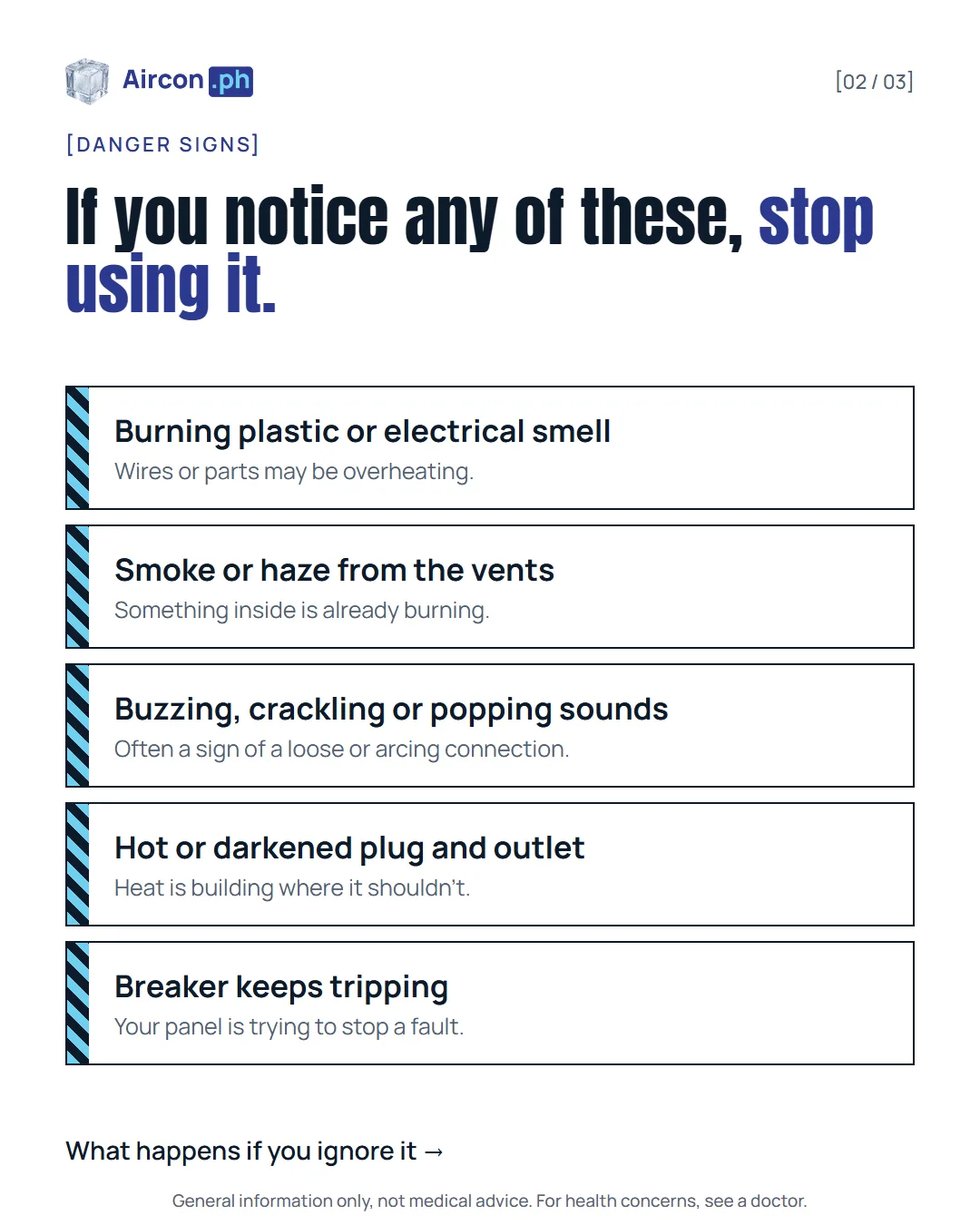
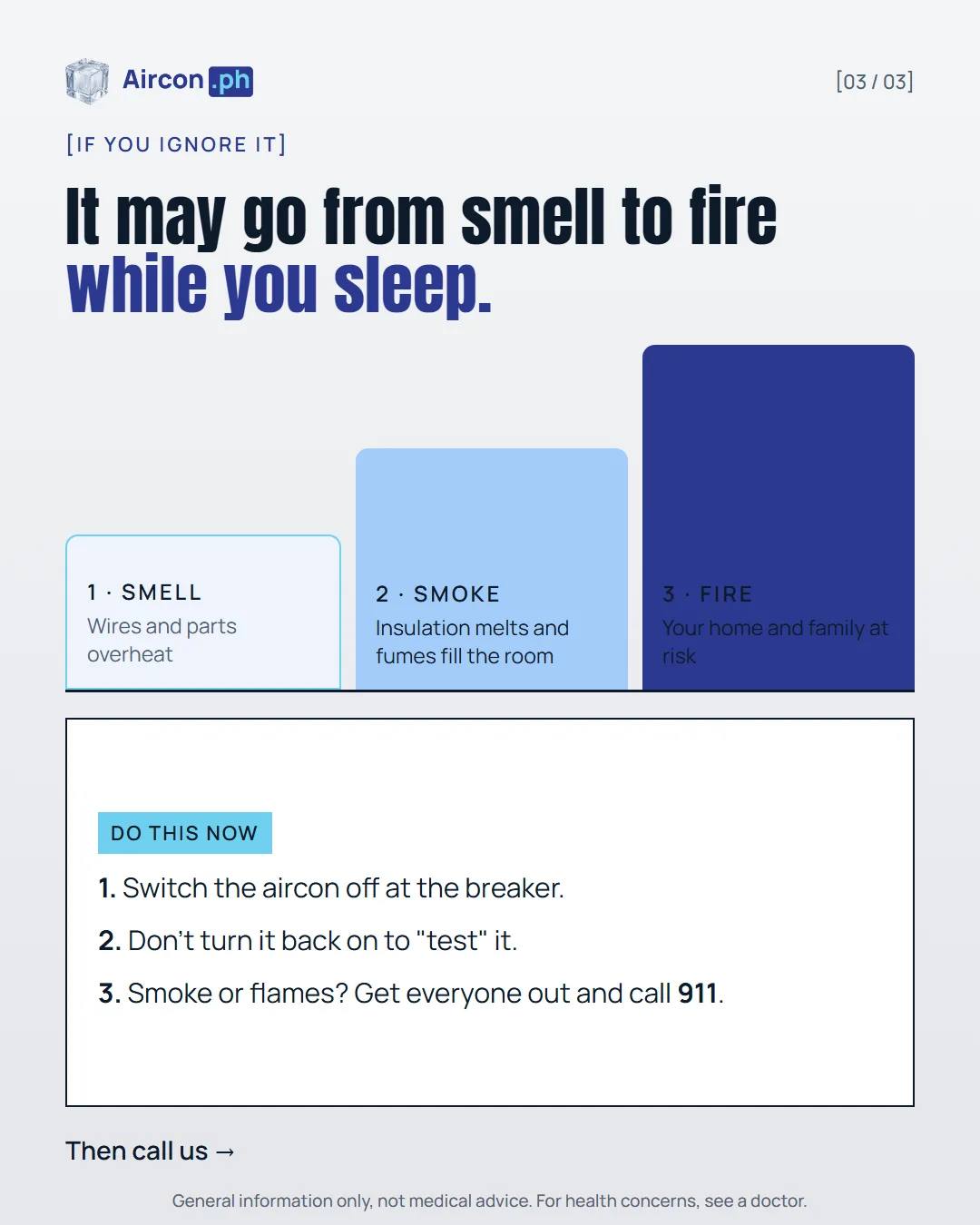
- Burning or electrical smell (shut off immediately and call a technician)
- Smell is accompanied by coughing, sneezing, or allergic reactions in household members
- The unit has not been professionally cleaned in over a year
What it costs
The technician checks the unit and quotes the repair on site, for you to approve before any work starts.
See the check-up visit priceIn pictures
General information only, not medical advice. For health concerns, see a doctor.